Dignity by Design: Ending the Digital Economy of Poverty Porn
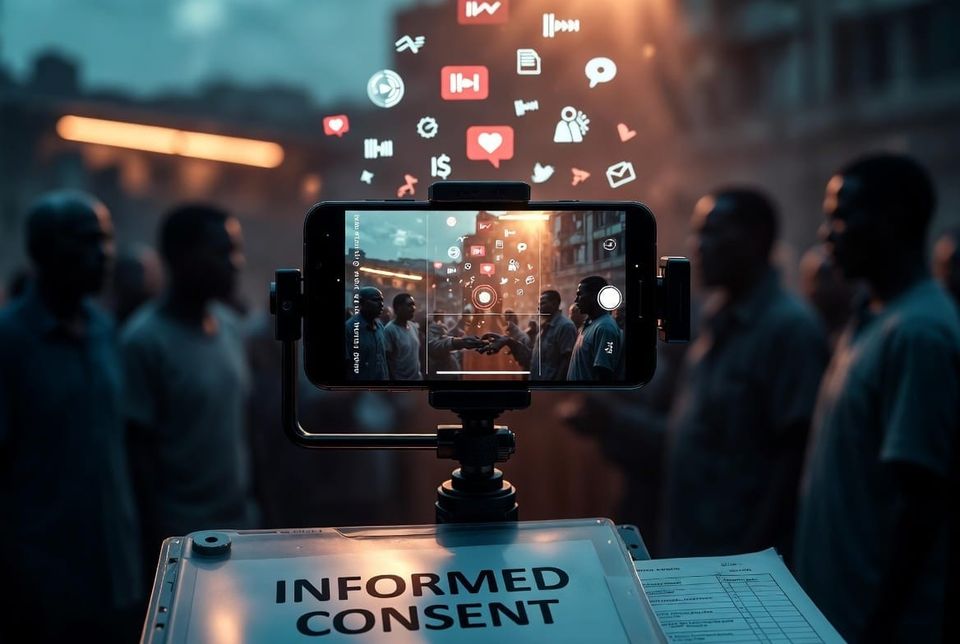
Charity content can raise awareness—but when vulnerable people become emotional scenery for clicks, donations, and creator revenue, the camera stops documenting hardship and begins extracting value from it.
Is charity content actually helping communities—or farming their hardship for engagement?
That question sits at the center of “Dignity by Design: Ending Poverty Porn,” a new short-form video guide from The Vault Investigates and Truthdrop.io, produced as part of the Seeds of Fire program.
Across TikTok, YouTube, Facebook, Instagram, and other social platforms, vulnerable people are routinely filmed at their most exposed: receiving food, opening envelopes, crying in public, describing trauma, or standing beside a creator framed as their rescuer.
The resulting content may attract millions of views. It may generate advertising revenue, sponsorships, donations, subscriptions, and social influence.
But the people whose hardship made that content valuable may receive little control over the story, no meaningful share of the revenue, and no protection from the permanent consequences of digital exposure.
This is not simply a problem of insensitive filming.
It is an exploitation economy built into the architecture of social media.

Truth to Power: Follow the Value Created by the Camera
Poverty porn does not require an openly malicious creator.
It can emerge whenever a system rewards emotional intensity more than informed consent, spectacle more than context, and creator visibility more than community agency.
The central investigative question is not whether a creator gave someone money, food, medicine, or shelter.
The real questions are:
- Who decided how the person would be portrayed?
- Did the subject understand where the footage would appear?
- Could consent be refused without losing assistance?
- Who owns the footage after publication?
- Who receives the advertising, sponsorship, and donation revenue?
- Can the subject withdraw consent later?
- Was the community involved in shaping the story?
- What happens after the camera leaves?
A charitable act does not automatically make the surrounding media practice ethical.
A bag of groceries cannot purchase permanent access to a person’s face, trauma, family history, medical condition, or humiliation.

Poverty Porn Is a Business Model, Not Just a Bad Image
The modern charity-content economy follows a repeatable formula:
- A creator identifies a visibly vulnerable person or community.
- The camera establishes hardship through close-ups, emotional testimony, or dramatic environmental footage.
- The creator introduces an act of rescue, gifting, or intervention.
- The subject’s emotional response becomes the climax.
- The video is edited for retention, sharing, and maximum emotional impact.
- The platform distributes the content based on engagement signals.
- Revenue and influence accumulate around the creator’s account.
- The subject often disappears from the financial story once filming ends.
This model turns poverty into a renewable content resource.
The creator can repeatedly monetize the appearance of generosity, while the person being filmed may receive only a one-time benefit—and may carry the reputational, psychological, and privacy costs indefinitely.
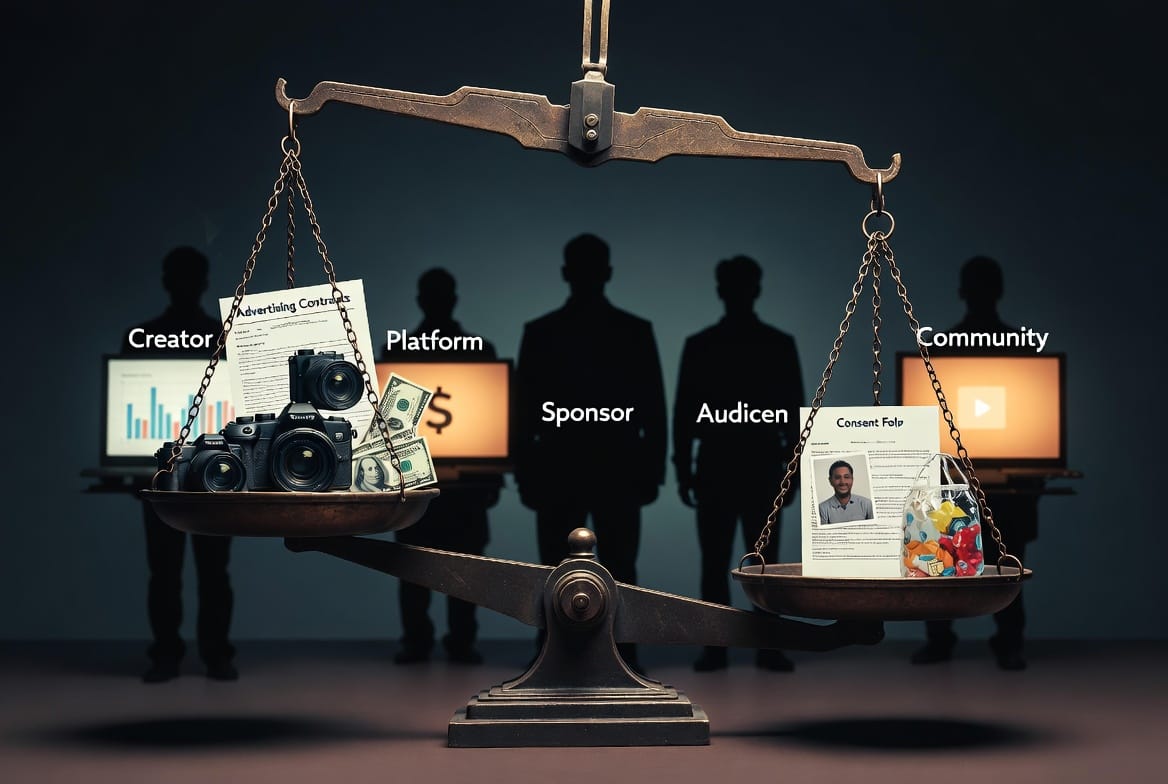
The Exploitation Economy: Who Gains and Who Carries the Risk?
The most important figures in charity content are often the figures that remain undisclosed.
Creators may publicly show the cost of a meal, a cash gift, or a hospital payment while withholding the value generated by the video itself. That missing information makes it impossible for viewers to determine whether the subject received a fair share of the economic value created through their story.
| Participant | Typical Benefit | Primary Risk or Cost | Accountability Question |
|---|---|---|---|
| Creator | Views, followers, ad revenue, sponsorships, donations, reputation | Public criticism or platform penalties | Was total revenue disclosed, and was any of it shared? |
| Social media platform | Advertising inventory, user retention, behavioral data | Reputational and regulatory scrutiny | Did the algorithm amplify humiliation or distress? |
| Sponsor or advertiser | Brand exposure and emotional association | Brand-safety concerns | Did the sponsor review consent and safeguarding practices? |
| Person being filmed | Immediate aid, publicity, or temporary assistance | Loss of privacy, stigma, retraumatization, permanent digital exposure | Was consent informed, voluntary, documented, and reversible? |
| Community | Possible resources or outside attention | Stereotyping, reputational harm, loss of narrative control | Did the community help define the story and its purpose? |
| Audience | Emotional engagement and perceived participation | Manipulation, incomplete information, performative giving | Were viewers shown evidence of outcomes and financial transparency? |
The imbalance is structural.
Creators, platforms, and advertisers can continue earning value long after publication. The subject’s benefit may end when the recording stops.
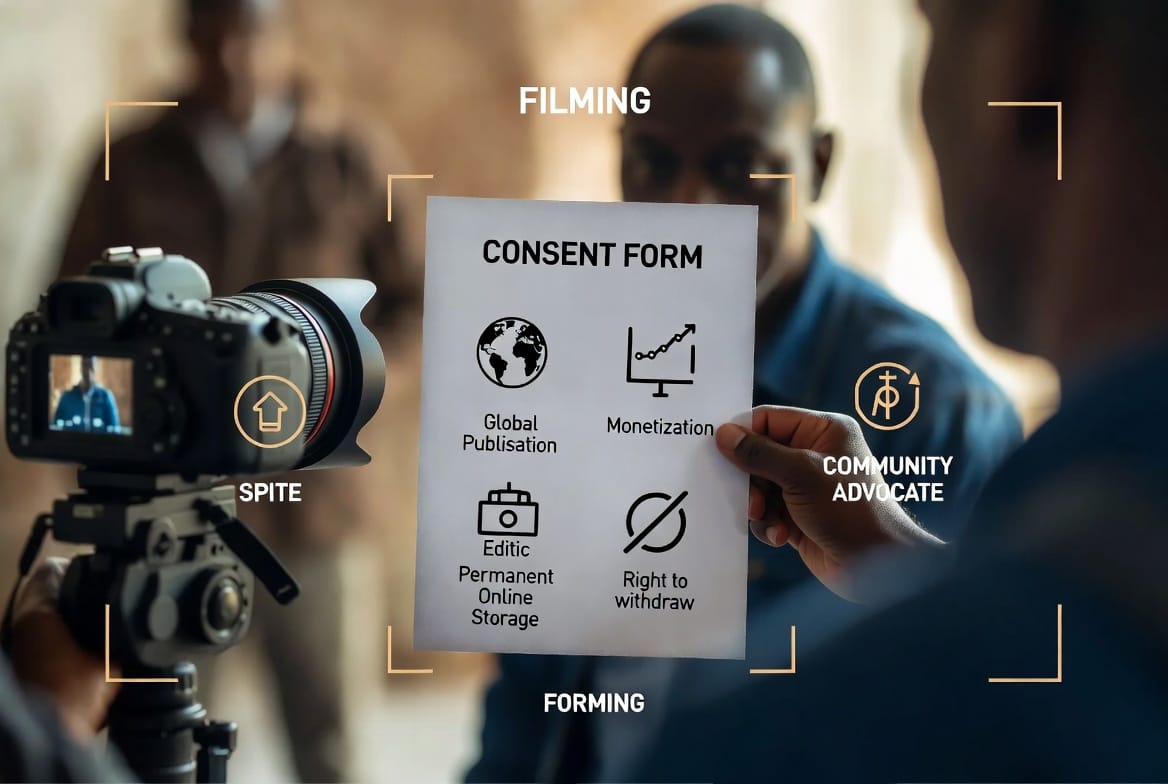
Informed Consent Must Be More Than a Camera-Side “Yes”
Consent is often treated as a brief exchange:
“Can I film you?”
The person agrees, the camera turns on, and the creator considers the ethical obligation complete.
But meaningful informed consent requires more.
A person must understand:
- Who is recording them
- Why the content is being produced
- Which platforms will publish it
- Whether the content will be monetized
- Whether advertising or sponsorships are involved
- How widely the footage may circulate
- How long the content may remain online
- Whether the footage can be edited, translated, or repackaged
- Whether refusing to participate will affect access to assistance
- Whether consent can later be withdrawn
Consent obtained during hunger, displacement, medical crisis, debt, disaster, or extreme financial dependency deserves heightened scrutiny.
When assistance is conditioned—explicitly or implicitly—on appearing before a camera, the power imbalance can make voluntary consent impossible.
The ethical standard cannot be merely, “They agreed.”
It must be: Did they have enough information, independence, and security to make a real choice?
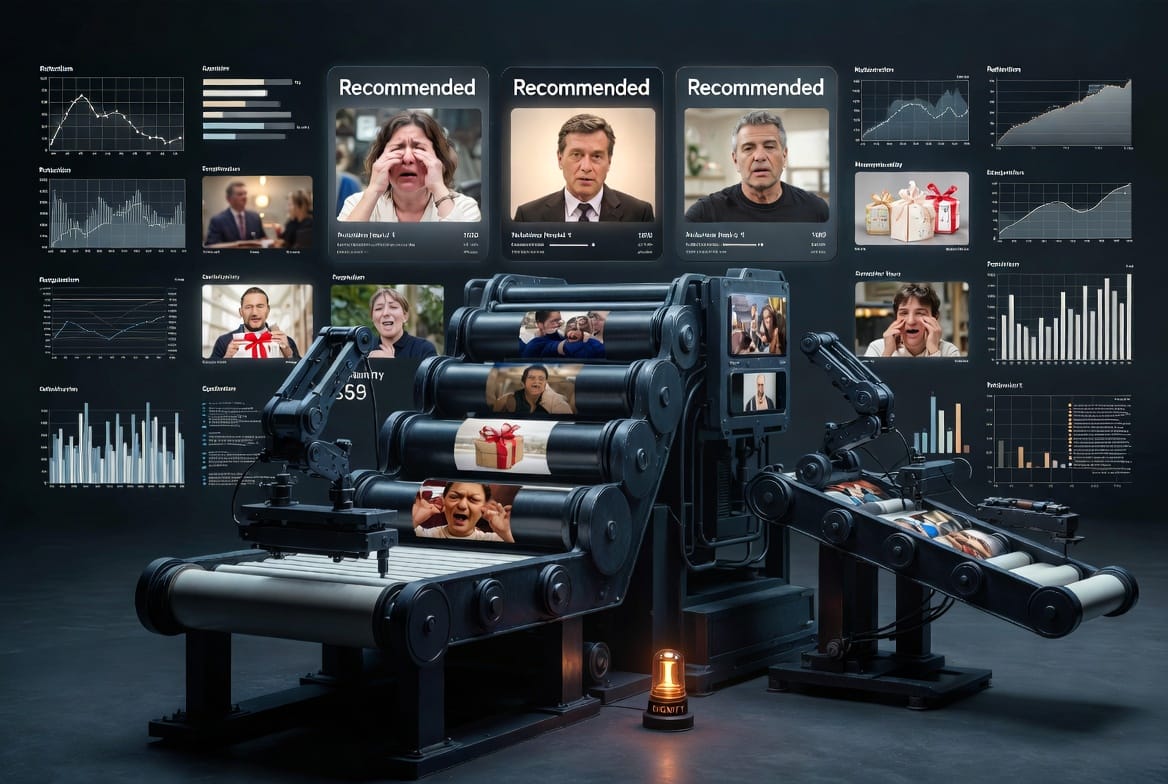
The Algorithm Does Not Measure Dignity
Social media platforms are not neutral distribution systems.
Their algorithms are designed to identify content that keeps people watching, reacting, commenting, and sharing. Extreme emotion performs well because it interrupts attention.
That creates a predictable incentive structure:
- Visible distress generates curiosity.
- Tears increase emotional engagement.
- Before-and-after narratives improve retention.
- Public gifting creates a dramatic payoff.
- Conflict generates comments.
- Repeated rescue stories build creator identity.
- Outrage and criticism can produce a second wave of traffic.
The platform does not need to understand whether a person was humiliated.
It only needs to detect that viewers stopped scrolling.
As a result, poverty porn can be rewarded twice: first through sympathy and then through controversy.

Data Visualization: The Expanding Gap Between Exposure and Control
Imagine a graph with two lines moving from the moment a video is published.
The first line represents creator and platform value. It rises as views accumulate, advertisements are served, followers increase, sponsors take notice, and older videos continue generating traffic.
The second line represents subject control. It begins low and often falls over time. Copies are downloaded. Clips are reposted. Screenshots circulate. Reactions and commentary appear. The subject loses the practical ability to control where their face, name, hardship, or emotional response is displayed.
The visual pattern is stark:
As monetizable exposure rises, personal control declines.
A dignity-centered framework must interrupt that pattern by increasing the subject’s authority before publication—and preserving accountability after publication.
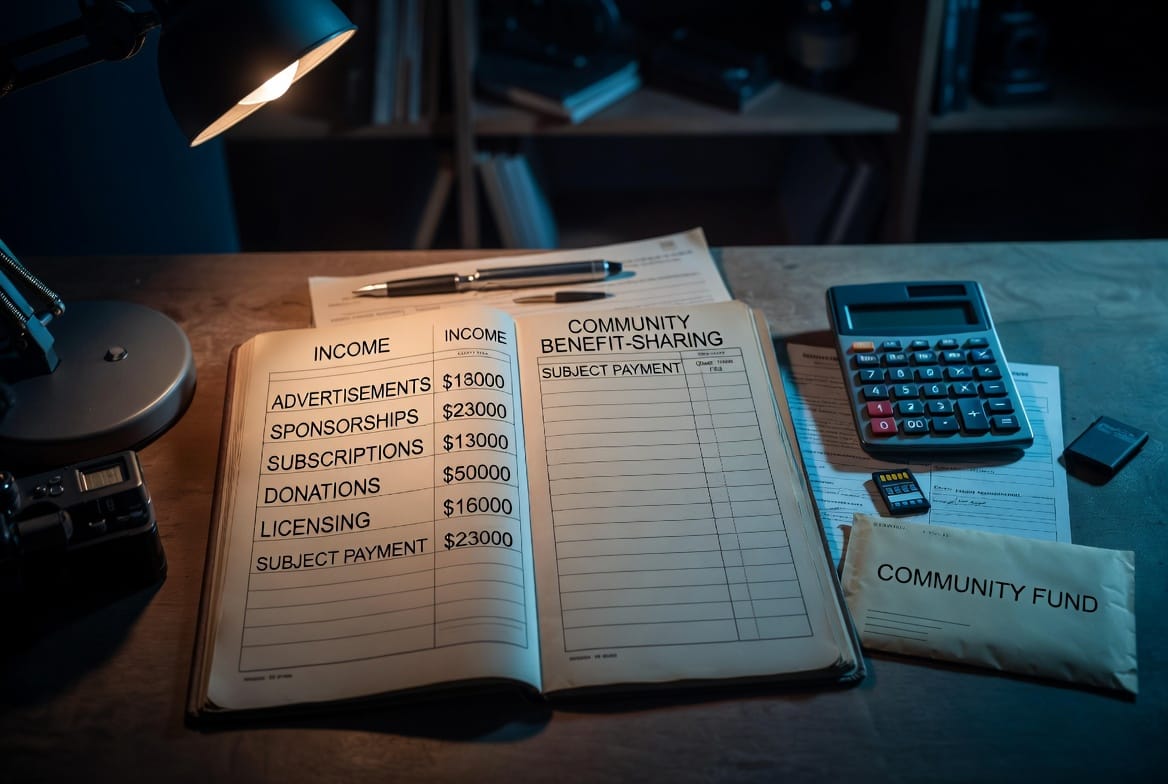
Fair Benefit-Sharing: The Missing Line in the Ledger
Ethical storytelling requires creators to recognize that vulnerable people are not merely recipients of aid.
They may also be contributors to a commercial media product.
Their image, testimony, environment, relationships, and emotional reactions can become the central assets that make the content profitable. Fair benefit-sharing asks whether those contributions are being recognized.
That may include:
- Direct compensation for participation
- A defined share of campaign or content revenue
- Community-controlled development funds
- Payment for local producers, translators, and researchers
- Written disclosure of sponsorship and monetization
- Long-term support rather than one-time gifting
- Independent safeguarding and grievance procedures
- Follow-up reporting on outcomes
- The ability to request removal or correction
Benefit-sharing must never become a payment for humiliation.
The objective is not to establish a market price for suffering. It is to prevent creators from privately capturing the value of stories that vulnerable people were pressured to provide.
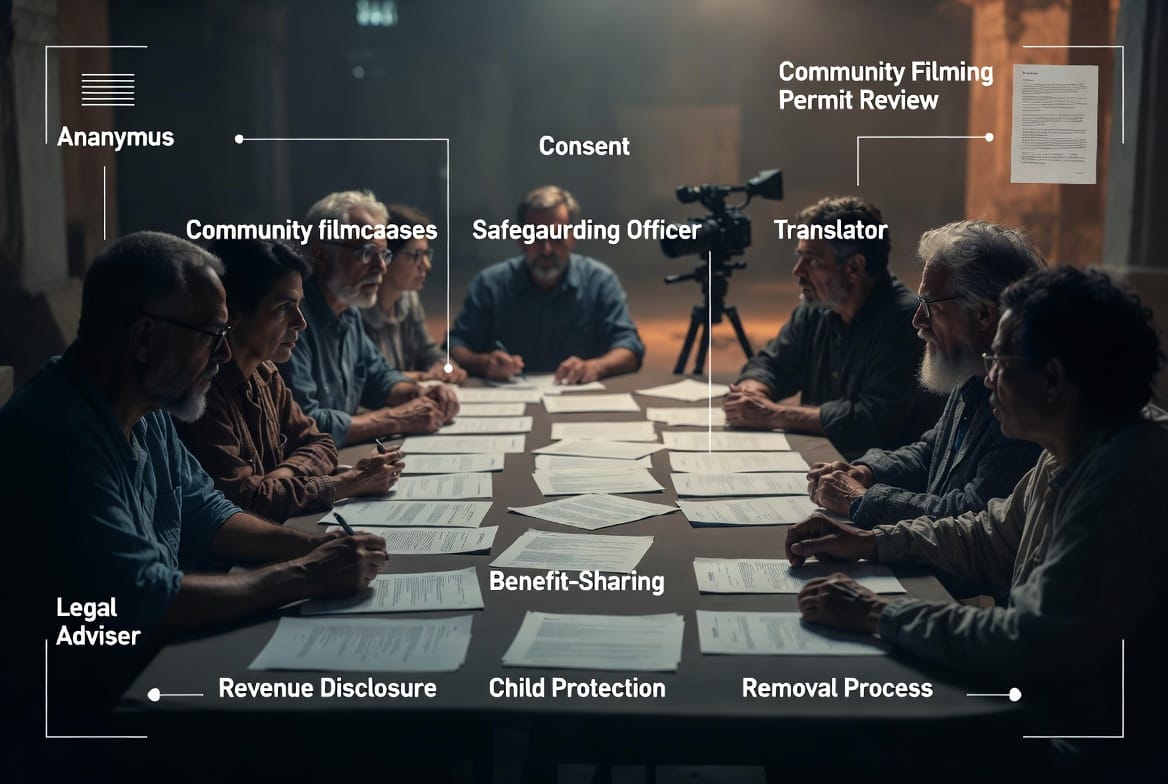
Dignified Community Filming Requires Accountability Before Recording
The Dignified Community Filming Permit, or DCFP, is presented as an independent accountability framework for creators filming in vulnerable communities.
It is designed to move ethical review to the beginning of the production process rather than treating harm as a public-relations problem after publication.
A dignity-centered filming process should require:
- A clearly stated public-interest purpose
- Documented informed consent
- Additional protections for children and vulnerable adults
- Transparent monetization disclosures
- A written benefit-sharing plan
- Community consultation
- Limits on filming trauma, medical conditions, and private spaces
- Secure handling of names, addresses, and identifying details
- A correction and removal process
- Post-publication follow-up
No badge, permit, or checklist can guarantee ethical conduct by itself.
Its value depends on verification, public standards, enforceable consequences, and the ability of subjects to file complaints without retaliation.

Community Agency Means Abandoning the Savior Narrative
The savior narrative places the creator at the center.
The community becomes a backdrop. The subject becomes evidence of the creator’s compassion. Structural causes disappear behind a dramatic act of individual generosity.
Ethical storytelling reverses that hierarchy.
Communities should have meaningful authority over:
- Which issues deserve attention
- Who speaks for the community
- What information remains private
- How residents are described
- Which images are used
- How revenue is distributed
- What outcomes matter
- How corrections are handled
Creators should not arrive with a completed story and search for people to fill predetermined roles.
They should listen before recording, collaborate before publishing, and remain accountable after the audience moves on.

What Ethical Storytelling Looks Like
The alternative to poverty porn is not silence.
Poverty, inequality, displacement, labor exploitation, hunger, and public-policy failure must be documented. Suppressing those realities protects powerful institutions, not vulnerable communities.
The difference lies in how the story is produced.
Ethical storytelling:
- Documents systems rather than displaying suffering as spectacle
- Explains the policies and institutions producing hardship
- Protects people who cannot safely provide public consent
- Avoids unnecessary close-ups of distress
- Gives communities editorial input
- Discloses monetization and sponsorships
- Shares benefits fairly
- Tracks outcomes after publication
- Measures impact beyond views
- Treats people as rights-holders, not content assets
The strongest stories do not ask audiences to pity people.
They help audiences understand power.
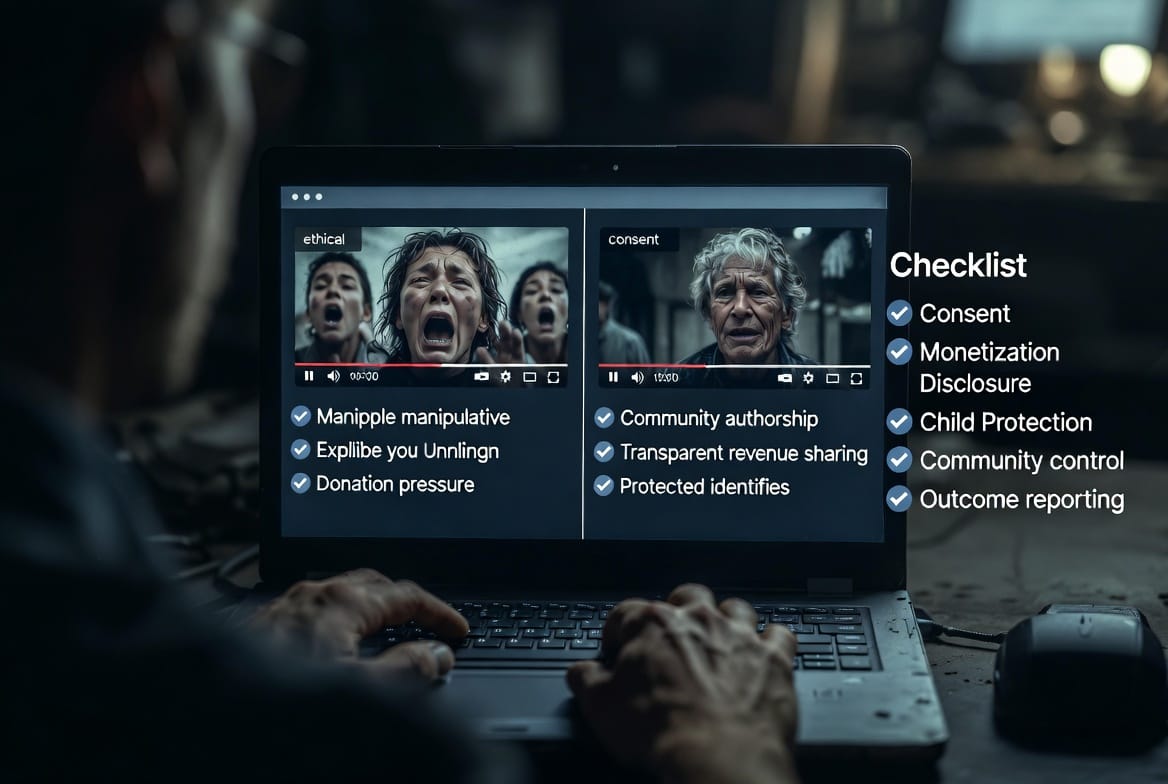
How Viewers Can Identify Dignity-Centered Content
Audiences are not powerless. Every view, follow, donation, comment, and share sends a market signal.
Before supporting charity content, ask:
- Does the creator explain how consent was obtained?
- Is monetization disclosed?
- Are children or distressed people identifiable?
- Does the video focus on the subject’s humiliation?
- Is the creator presented as the hero?
- Are structural causes explained?
- Is there evidence of community participation?
- Are financial outcomes reported?
- Can subjects request removal?
- Does the creator follow up after the viral moment?
Viewers should look for transparent ethical standards, including frameworks such as the Resilience & Representation Permit badge, while still examining the evidence behind any certification claim.
A badge should begin scrutiny—not replace it.

Watch “Dignity by Design: Ending Poverty Porn”
Coming Soon: Our new short-form guide breaks down the practical steps creators, viewers, platforms, and communities can take to replace exploitative charity content with dignity-centered storytelling.
Watch the video on TikTok and Reels. Share it with journalists, nonprofit workers, community organizers, educators, donors, and creators.
Then do more than watch.
Support storytellers who practice informed consent. Demand financial transparency. Question savior narratives. Refuse to reward humiliation. Back community-led media. Ask platforms why exploitation remains profitable.
The fight against poverty porn is not a fight against generosity.
It is a demand that generosity stop being used as a shield for extraction.

Help Shift the Narrative
Subscribe to The Vault Investigates for evidence-based reporting on the systems that turn poverty, charity, trauma, and public sympathy into private influence and revenue.
Follow Truthdrop.io and the Seeds of Fire program for investigations, ethical-media frameworks, and tools designed to return agency to the people whose lives become content.
We publish truth to power because you do.
Support Ethical Creators
The Vault Investigates and Truthdrop.io are built for one thing: documenting the business of poverty without exploiting the people living through it.
We stay in our lane:
- Non‑partisan, non‑ideological.
- We only follow politics when it crosses with the business of poverty, exploitation, or corruption.
- No savior narratives. No pity content. Just evidence, records, and dignity‑first storytelling.
Four Ways to Contribute
You can help keep this work independent, survivor‑centered, and accountable:
- Subscribe & Share
Stay on the record. Subscribe, reshare our investigations, and bring more eyes to dignity‑centered reporting. - Fund the Archive
Contribute directly to platform costs, secure storage, and long‑term investigative infrastructure that protects sources and records. - Support Field Documentation
Help cover safe travel, community consultations, and ethical documentation in vulnerable areas—always with informed consent and benefit‑sharing. - Equip Ethical Creators
Back training, permits, and tools for creators who refuse poverty porn and commit to resilience‑ and representation‑based storytelling.
How This Is Really Funded
You’ll notice what’s missing:
- No sponsors
- No advertisers
- No government grants
- No NGO funding
Ever wonder how this still gets published?
It is fully funded by a disabled veteran, using their Social Security check and VA disability, working behind the scenes as an anonymous steward of the record—known only as The Vault Archivist.
No corporate leash. No donor agenda. Just one archivist, one community of ethical creators, and a commitment to keep the truth on the record.
If you believe in media that refuses to profit from other people’s pain, this is your invitation: stand with The Vault Archivist, support ethical creators, and help us keep this archive alive and independent.
The truth is on the record. Welcome to Seeds of Fire.
Help End the Exploitation Economy
Poverty should never be used as a backdrop for profit. Subscribe to The Vault Investigates for evidence-based reporting on poverty porn, digital exploitation, platform accountability, and the systems that turn human hardship into revenue.
Support ethical storytelling. Demand informed consent. Follow the money. Keep the truth on the record.
The truth is on the record. Welcome to Seeds of Fire.

Member discussion