SEEDS OF FIRE — PART III-A
In collaboration with Anonymous Media Group and The Dirty Dozen Dispatch
If you haven’t read Part I — “Smile for the Camera” — start there. It’s free. It explains the machine. Part II named the operators. .We are not following the peso anymore.
The videos look simple.
A person arrives. Someone is in need. Money changes hands. The moment is recorded.
But behind that moment is architecture — a structured, repeatable financial system designed to convert suffering into revenue.
This is Part III-A. We are not following the peso anymore.
We are following the system that moves it.
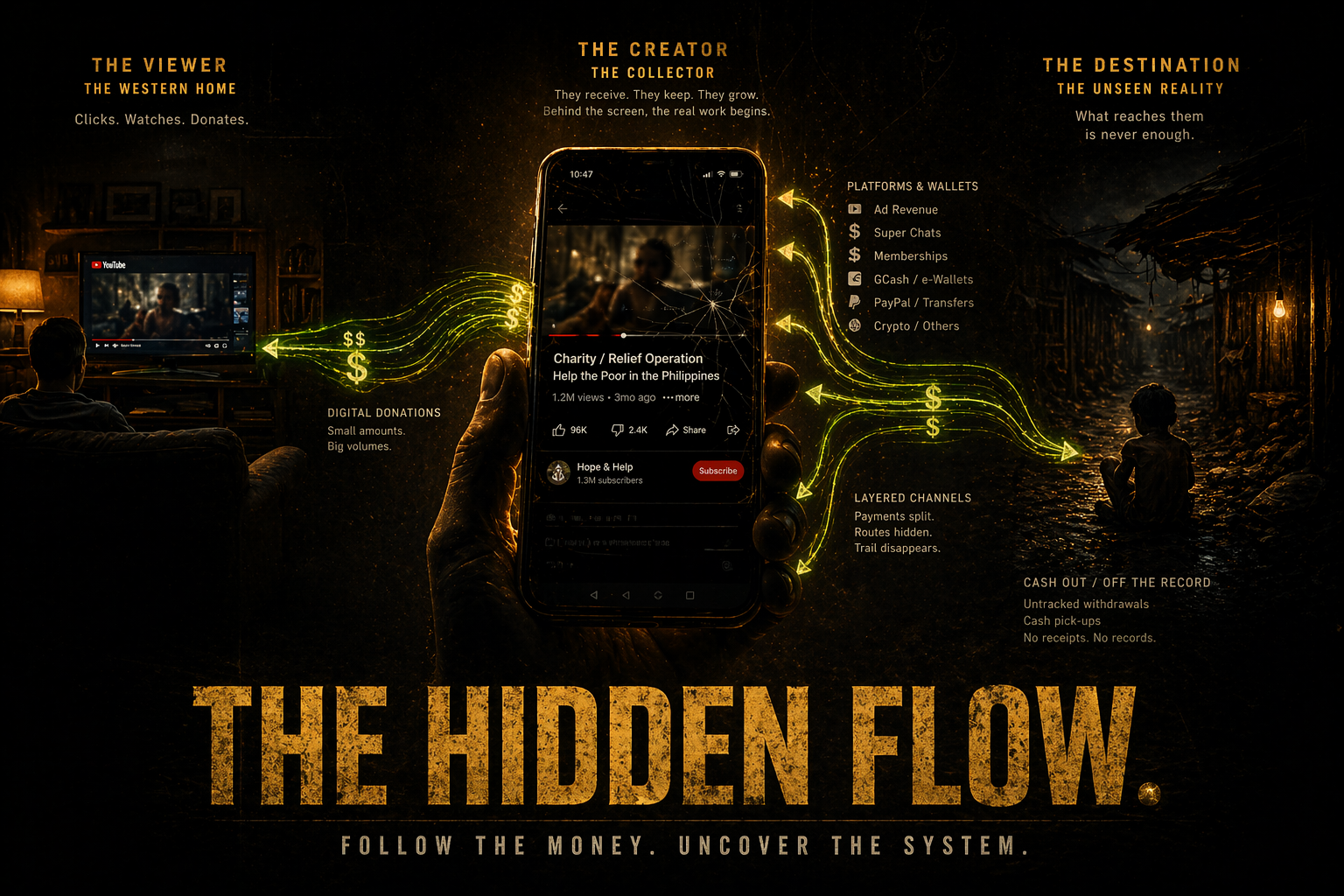
The Hidden Flow
At the surface, it appears to be:
Viewer → Creator → Person in Need
The reality is a closed loop:
Viewer attention → YouTube amplification → Ad revenue → Emotional trigger → Off-platform donations → Creator-controlled distribution → Subject filmed again → New content → Repeat
Control never leaves the creator. The subject never holds the ledger.
CPM Arbitrage: The Foundation
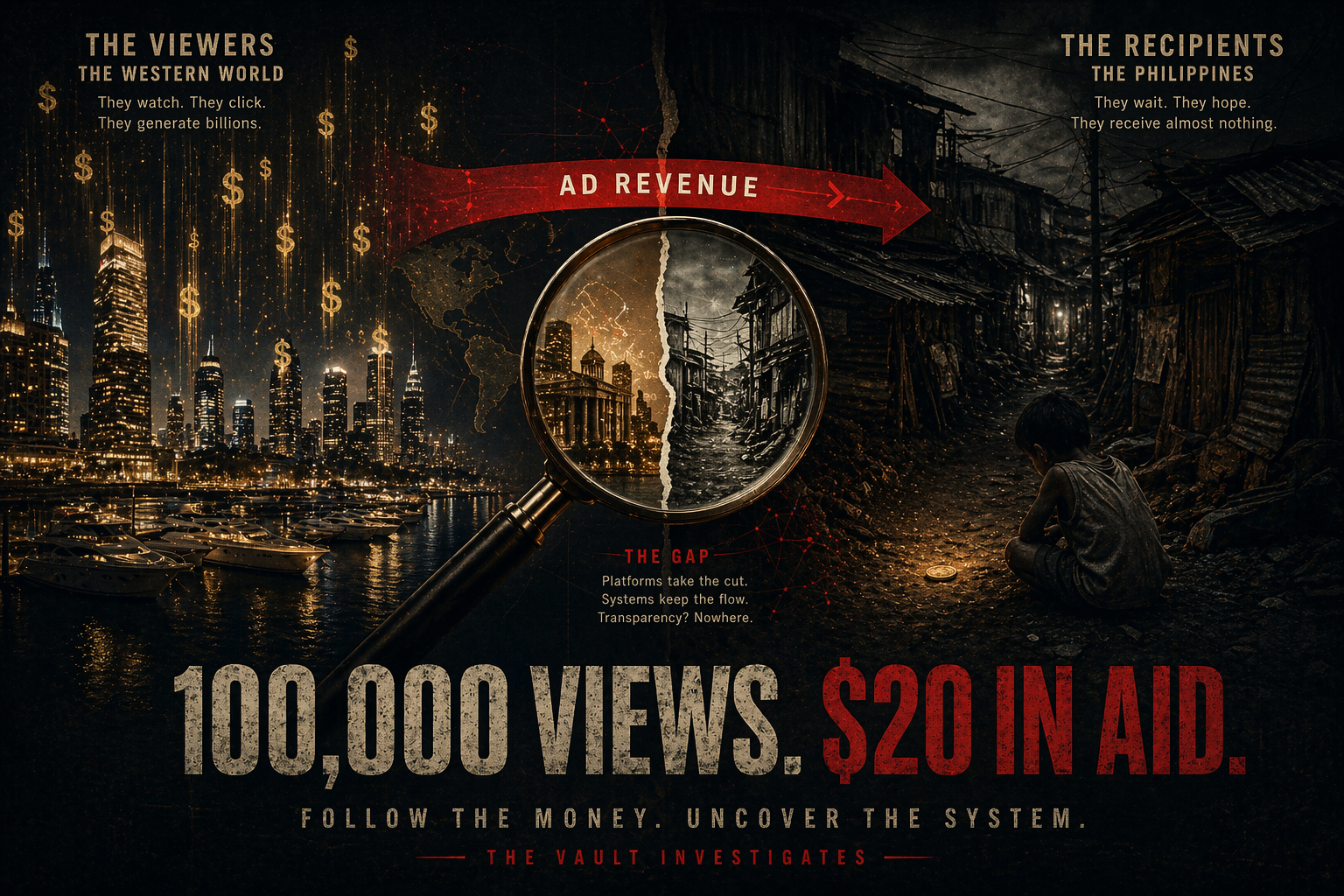
This is not random charity. It is geographic value extraction.
- Viewers: United States, Europe — high advertiser value
- Content: filmed in lower-income environments — low cost, high emotional yield
- Result: 100,000 Western views = ~$300–$1,500 in ad revenue. On-camera aid = ~$20–$100.
A single video can generate more money than it distributes. This is not accidental. It is structurally embedded in the platform economy.

GCash: The Unregulated Money Rail
After the emotional trigger fires, viewers are directed off-platform:
“GCash: 09XXXXXXXXX”
“PayPal: username”
“Send help here”
These payments:
- Are not tracked by YouTube
- Are not publicly audited
- Are not transparently distributed
There is no visible ledger connecting donation → recipient → outcome.
GCash, in this context, functions as an unregulated humanitarian payment rail. Money flows in. Accountability does not flow out.
[Evidence on file: vet.thevaultinvestigates.cloud/receipts]
The DSWD Regulatory Gap
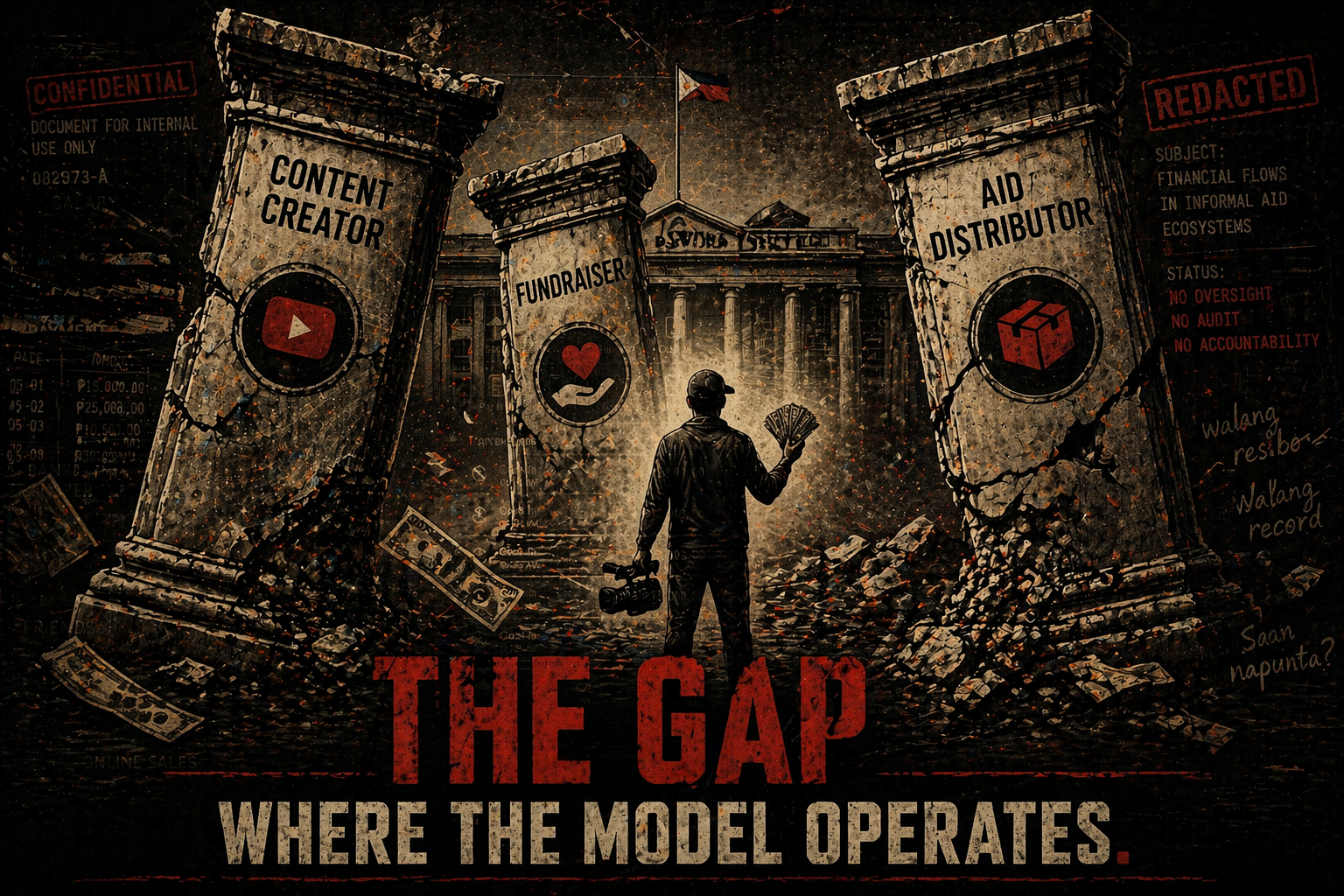
Philippine law requires permits for public solicitation. The DSWD oversees welfare activities.
But digital spaces broke the framework.
Creators operate as individuals — not registered charities — while simultaneously:
- Soliciting funds publicly
- Distributing aid on camera
- Building monetized audiences around welfare content
They are content creators, fundraisers, and aid distributors in one — regulated as none of the three.
YouTube Is Not Neutral
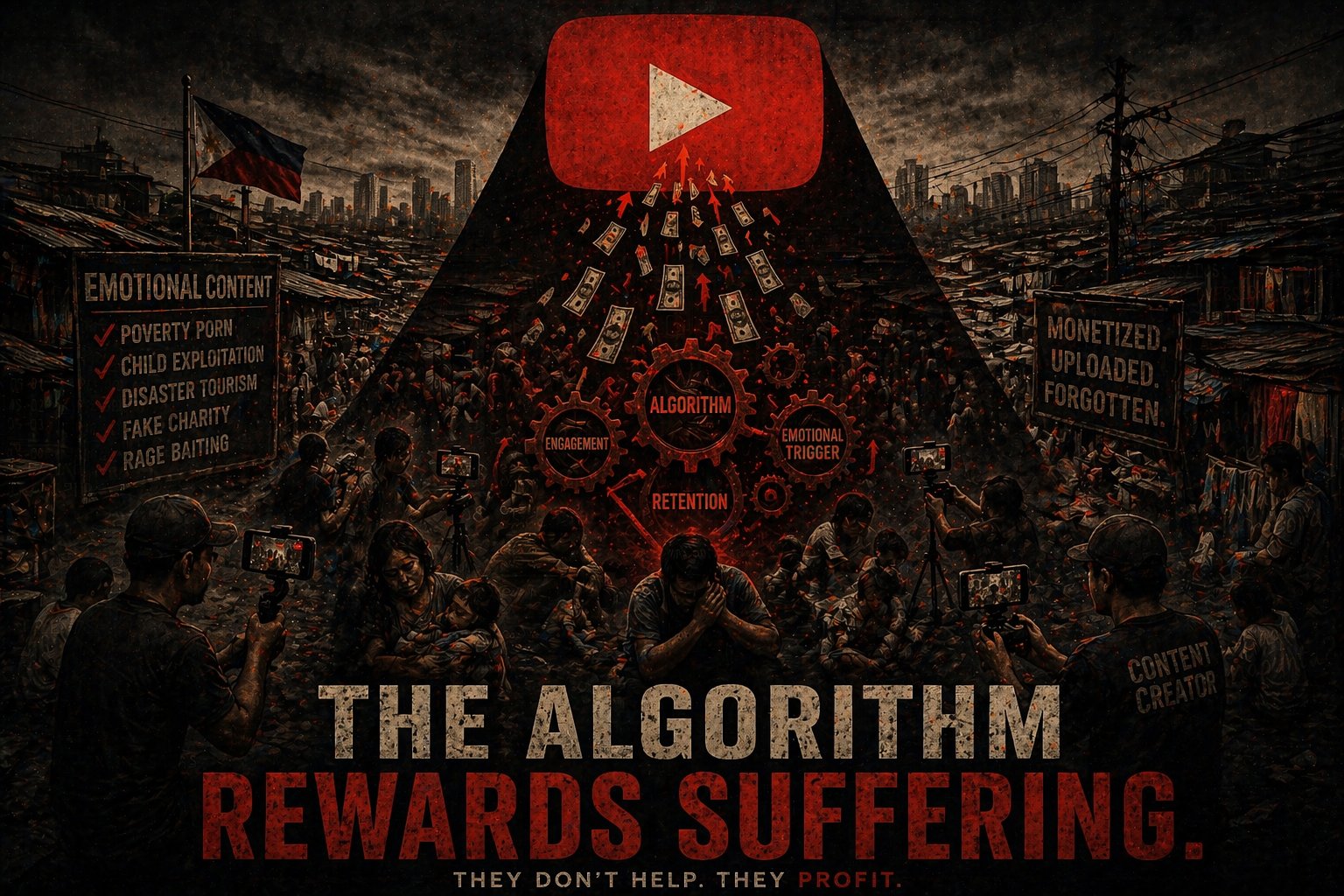
YouTube recommends these videos. Monetizes them. Amplifies them.
Its algorithm rewards:
- Emotional intensity
- Visible hardship
- Transformation narratives
The feedback loop:
More emotional content → More views → More revenue → More incentive to repeat
YouTube is not hosting the system. It is scaling it.
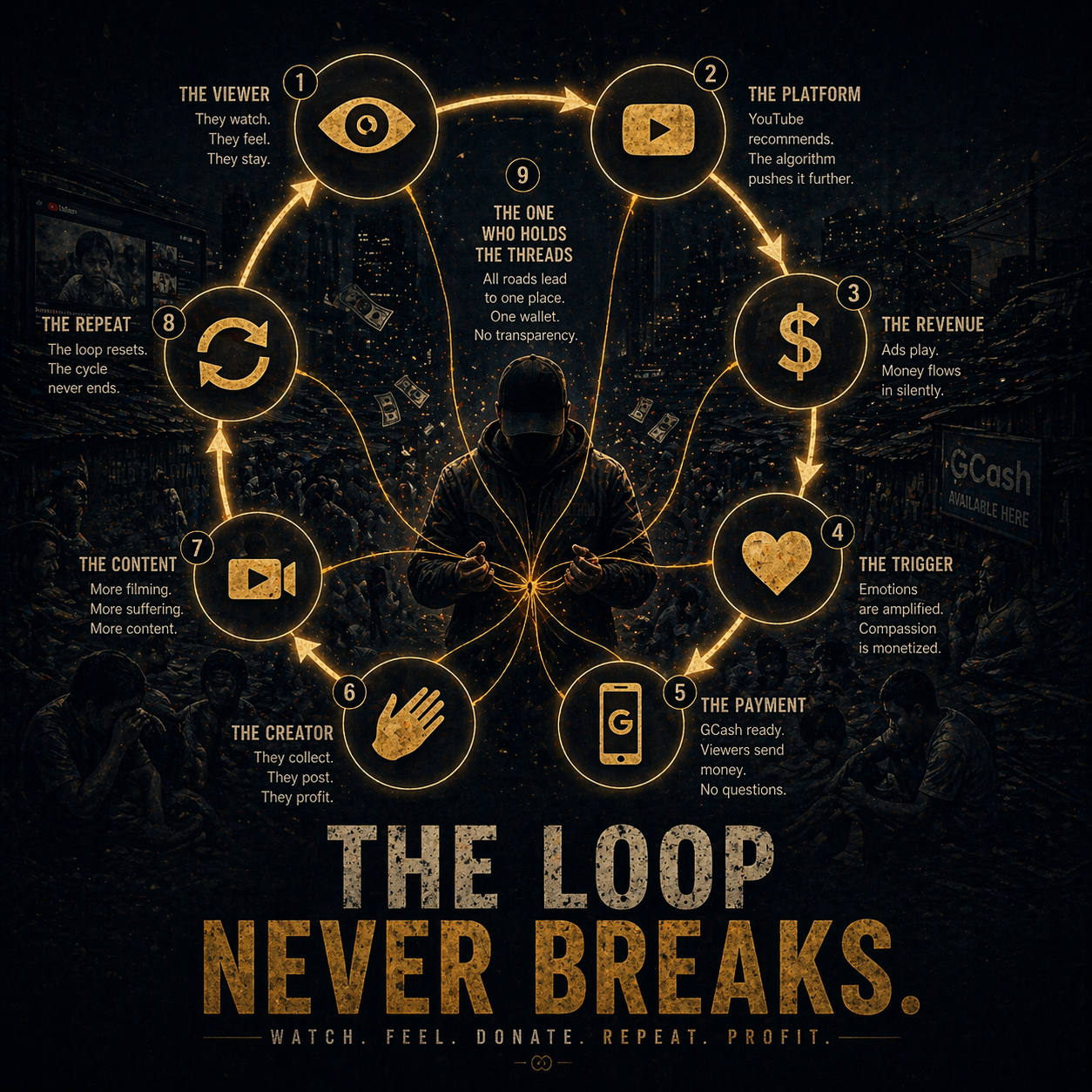
The Full Money Flow (9 Steps)
- Viewer watches video
- YouTube serves ads → creator earns revenue
- Viewer is emotionally activated
- Viewer sends money via GCash / PayPal
- Creator receives funds (off-platform, untracked)
- Creator distributes aid (partially or selectively)
- Subject is filmed again
- New content is produced
- Cycle repeats
At every stage — control remains with the creator.
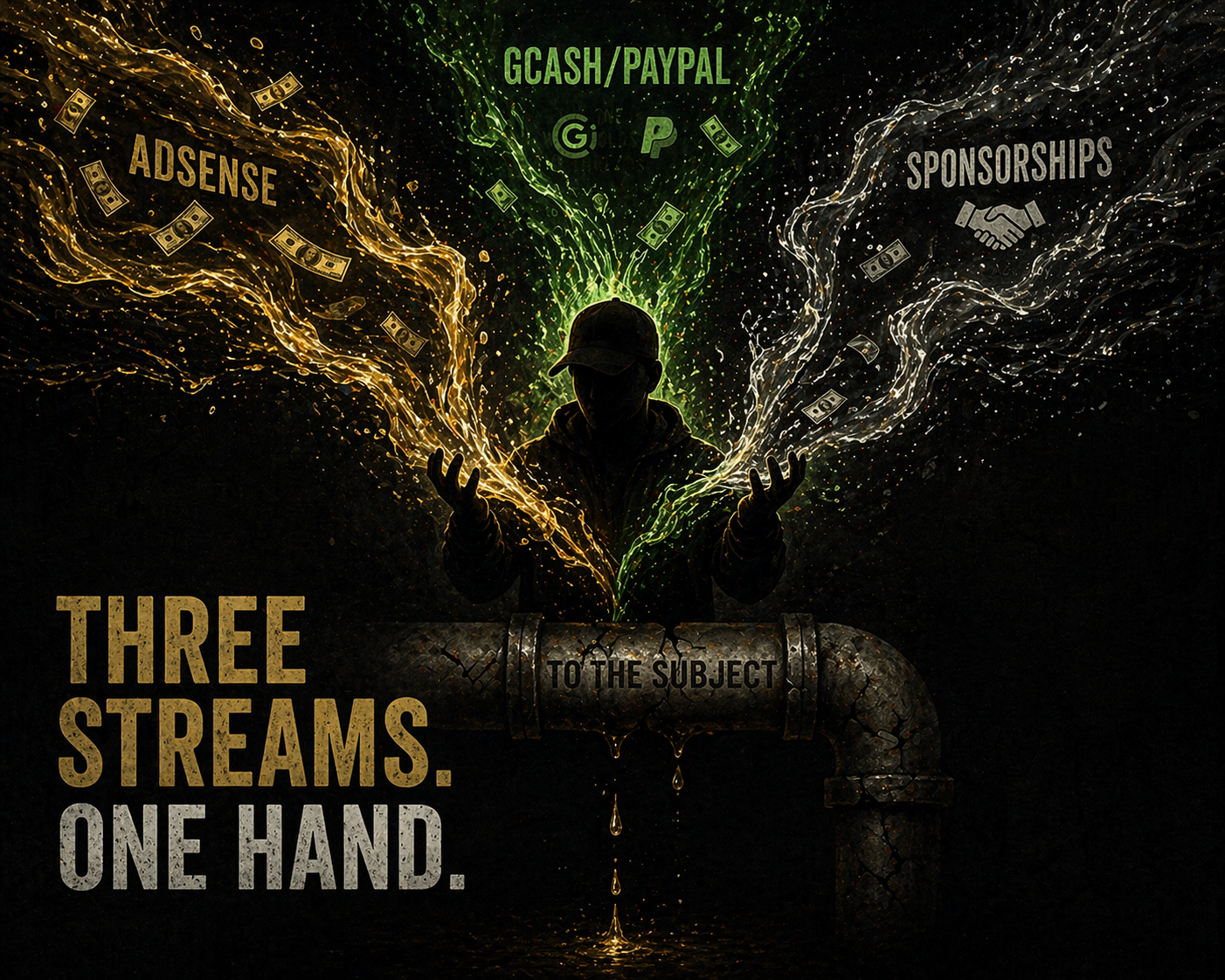
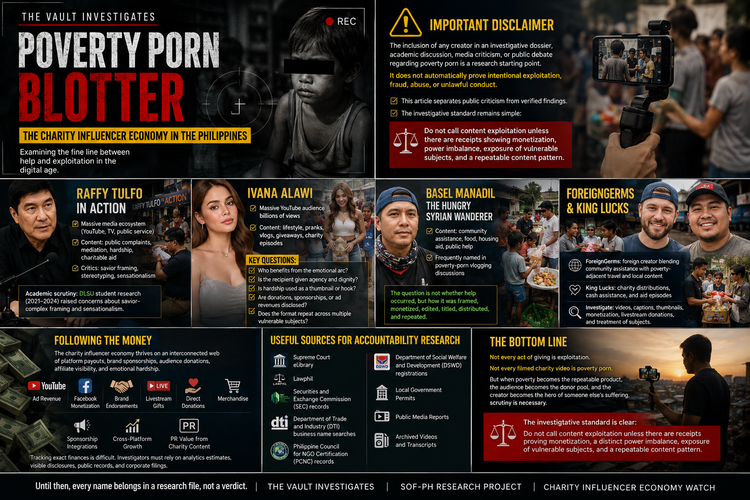
Three Revenue Streams
Stream Source Platform Revenue YouTube AdSense Direct Donations GCash, PayPal, crowdfunding Sponsorships Brand placements, affiliate links
What is missing: a verifiable path showing how much actually reaches the people being filmed.
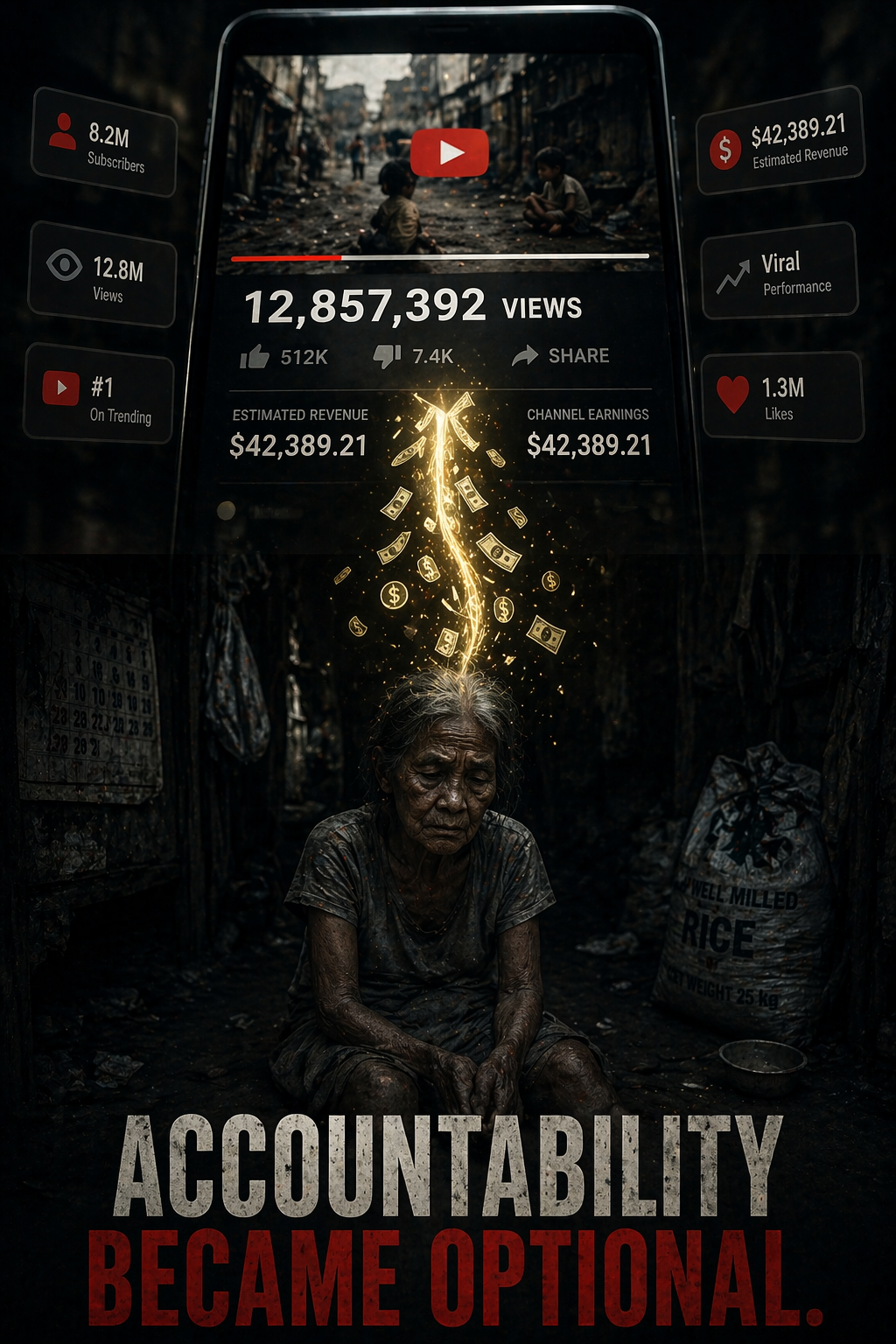
The Accountability Gap
Three systems. Three disconnected layers:
- YouTube — platform monetization
- GCash / PayPal — payment processing
- DSWD — welfare oversight
None fully connect. That gap is where this model operates.
Records That Should Exist
From DSWD:
- Permits for online fundraising
- Enforcement actions against digital solicitors
- Guidelines for social media welfare content
From YouTube / Google:
- Policies on monetized charity content
- Enforcement of misleading fundraising
- Monetization data tied to hardship content categories
From GCash:
- Policies on donation use verification
- Monitoring of high-volume accounts
- Reporting requirements for public solicitation accounts
All receipts and evidence documentation: vet.thevaultinvestigates.cloud/receipts
What This Proves
This is not about individual intent.
It is about structure.
Poverty content has evolved into a multi-channel revenue system combining platform monetization, off-platform donations, and regulatory gaps.
The result:
Visibility becomes currency.
Suffering becomes content.
Accountability becomes optional.
Part IV → Ethics, Consent, and the Children on Camera.
Support The Vault Investigates: ko-fi.com/thevaultinvestigates | paypal.me/thevaultinvestigates
#investigativejournalism #OSINT#childprotection #povertyporn #platformaccountability
#justice #humanrights #ethics #transparency #investigativejournalism
Member discussion